

Beach Safety for Dogs: What Every Owner Should Know
A day at the beach is one of the best adventures you can share with your dog. Running in the sand, splashing in the waves, or simply enjoying the sunshine together creates unforgettable memories. But while the beach is fun, it also comes with risks that many dog owners overlook.
If you’re planning to visit Zandvoort beach with your dog — or any other coastal destination — it’s important to prepare well. This guide will walk you through the top beach safety tips for dogs, so you and your four-legged friend can enjoy the seaside worry-free.
1. Heat and Hydration
Summer sun is wonderful, but dogs can overheat quickly. Since they cool down mainly through panting, not sweating, it’s important to prevent heatstroke.
-
Visit the beach in the morning or evening.
-
Bring plenty of fresh drinking water.
-
Provide shade with an umbrella or tent.
-
Watch for signs of overheating: heavy panting, drooling, weakness, confusion, or vomiting. If you notice these, get your dog to a cool place, offer water, and contact a vet.
2. Hot Sand and Paw Protection
Sand can get extremely hot and burn sensitive paws. Check with your hand: If you can’t hold your palm on the sand for 5 seconds, it’s too hot for your dog.
-
Stick to wet sand near the waterline.
-
Walk during cooler hours.
-
Consider paw wax or dog booties on very hot days.
-
After the beach, rinse paws to remove salt and sand.
3. Salt Water: Tempting but Dangerous
Some dogs love drinking from the sea, but salt water can cause vomiting, diarrhea, and in extreme cases salt poisoning.
-
Always bring a bowl and fresh water.
-
If your dog has swallowed a lot of seawater and seems lethargic, bloated, or starts vomiting, contact a vet immediately.
-
Rinse your dog’s coat and paws after swimming to prevent irritation.
4. Waves, Currents, and Swimming Safety
The sea looks inviting, but currents in the North Sea can be stronger than expected. Even experienced swimmers — human or dog — can struggle.
-
Never throw toys far into the surf. Stay in shallow water where your dog can stand.
-
Use a dog life jacket, especially for small dogs, older dogs, or breeds not built for swimming.
-
Always supervise your dog. Don’t assume they’ll be safe on their own in the water.
-
Watch for signs of fatigue — dogs will keep paddling until they’re exhausted, and that can become dangerous quickly.
If your dog gets caught in a current:
-
Stay calm — don’t rush in yourself, as rip currents are dangerous for humans too.
-
Call your dog back parallel to the shore, not directly against the current.
-
If they can’t return, get help from lifeguards immediately.
5. Jellyfish and Marine Hazards
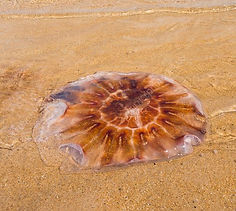
Zandvoort’s shoreline sometimes brings in jellyfish, especially in summer. Not all are dangerous, but some can sting both humans and dogs.
Common jellyfish in Zandvoort
-
Moon jellyfish (Aurelia aurita): Transparent with 4 purple rings in the center. Usually harmless.
-
Blue jellyfish (Cyanea lamarckii): Small, bluish bell. Can sting mildly, causing irritation.
-
Lion’s mane jellyfish (Cyanea capillata): Reddish or brown, with long tentacles. The sting can be painful and may cause swelling. Rare but possible in the North Sea.
-
Compass jellyfish (Chrysaora hysoscella): Yellow-brown with a pattern like a compass. Stings can cause pain and skin reactions.
What if your dog steps on or touches a jellyfish?
-
Don’t panic. Most stings cause mild pain, irritation, or swelling, but they are rarely life-threatening.
-
Move your dog away and stop them from licking or biting the jellyfish.
-
Rinse the area with seawater (not fresh water, as it can activate more stinging cells).
-
Remove tentacle remains with tweezers or the edge of a credit card — never with bare hands.
-
Monitor your dog: mild stings usually cause redness or swelling.
-
If your dog shows strong reactions (excessive drooling, vomiting, breathing difficulty, or severe swelling), seek a vet immediately.
Even dead jellyfish can still sting, so discourage your dog from sniffing or rolling on them.
6. Dead Fish, Shells, and Seaweed
Dogs are curious by nature, and many love sniffing or eating washed-up fish or crabs. Unfortunately, this can cause stomach upset or worse.
-
Prevent your dog from eating unknown objects on the beach.
-
Sharp shells can cut paws — rinse and check regularly during walks.
-
Some seaweeds, when rotting, release gases that can be harmful if ingested.
7. After-Beach Care
Once the fun is over, a bit of care ensures your dog stays healthy:
-
Rinse coat and paws with fresh water to remove salt, sand, and possible bacteria.
-
Dry thoroughly, especially between the toes and in floppy ears, to prevent infections.
-
Check for ticks, as dune grass around beaches is a common tick habitat.
8. Quick Checklist Before You Go
-
Fresh water & bowl
-
Umbrella or shade tent
-
Poop bags
-
Dog-friendly toys (ball, frisbee)
-
Towel & rinsing water
-
ID tag with phone number
-
Dog life jacket (if swimming)
Final Thoughts
The beach is a dog’s paradise — but safety comes first. By being prepared for heat, waves, jellyfish, and other natural hazards, you can make your seaside adventure both fun and worry-free.
So next time you visit Zandvoort beach with your dog, keep these tips in mind. With fresh water, shade, and a bit of awareness, your pup will return home tired, sandy, and happy — the perfect sign of a safe day at the sea.
%20dogs%20zandvoort.png)
%20zandvoort%20dogs.webp)
%20dogs%20zandvoort_edited.jpg)
%20dogs%20zandvoort.jpg)
